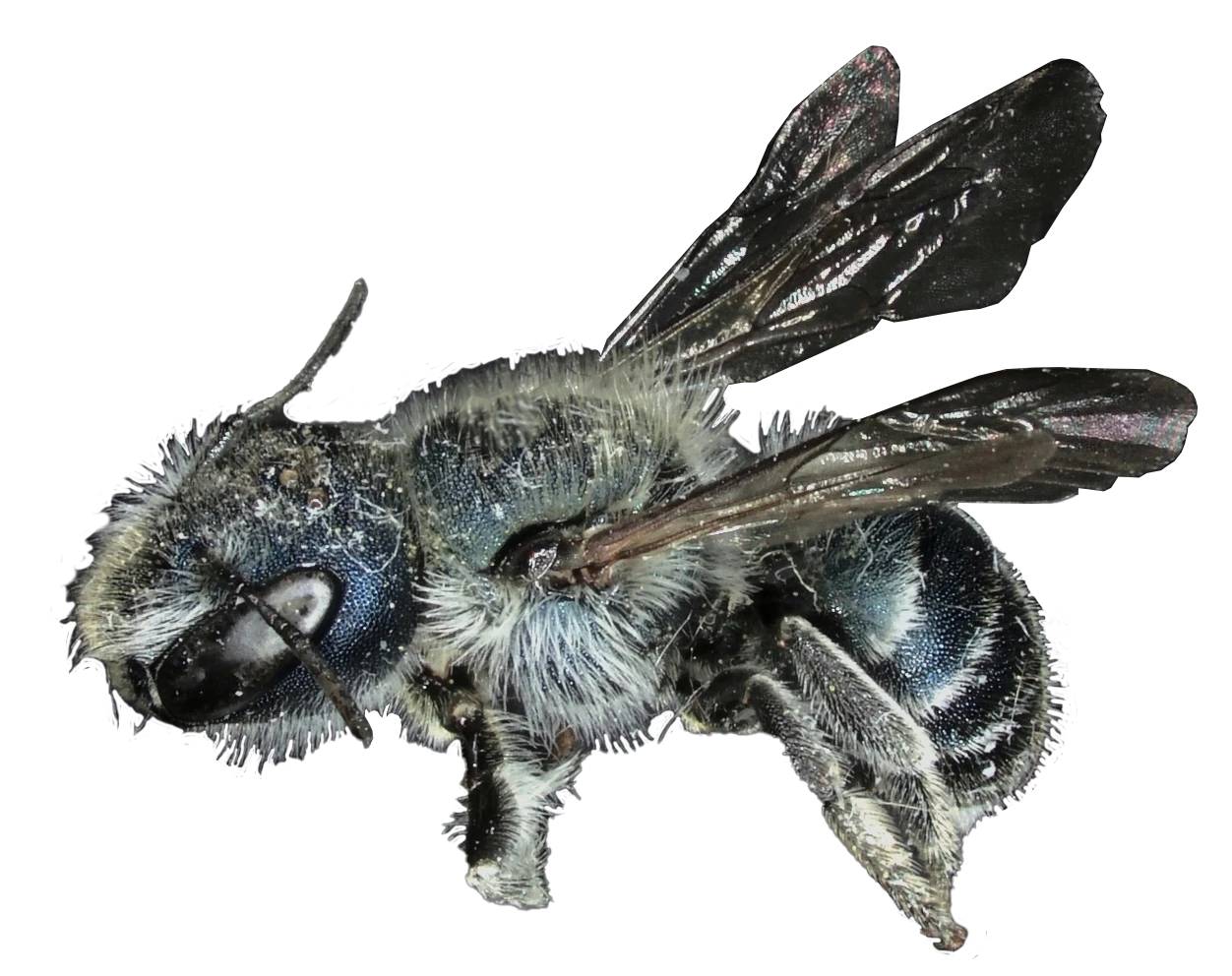
Wasps
Guardian Angels
from Hell
An alternative zoology exhibition, where artists and academics present virtually invisible wasps to the general public. Combining digital objects, 3D prints, interactive views, and narrative animations, the exhibition offers an insight into the life of tiny parasitoid wasps.
Chapter 1
Under the
microscope
Calosota aestivalis
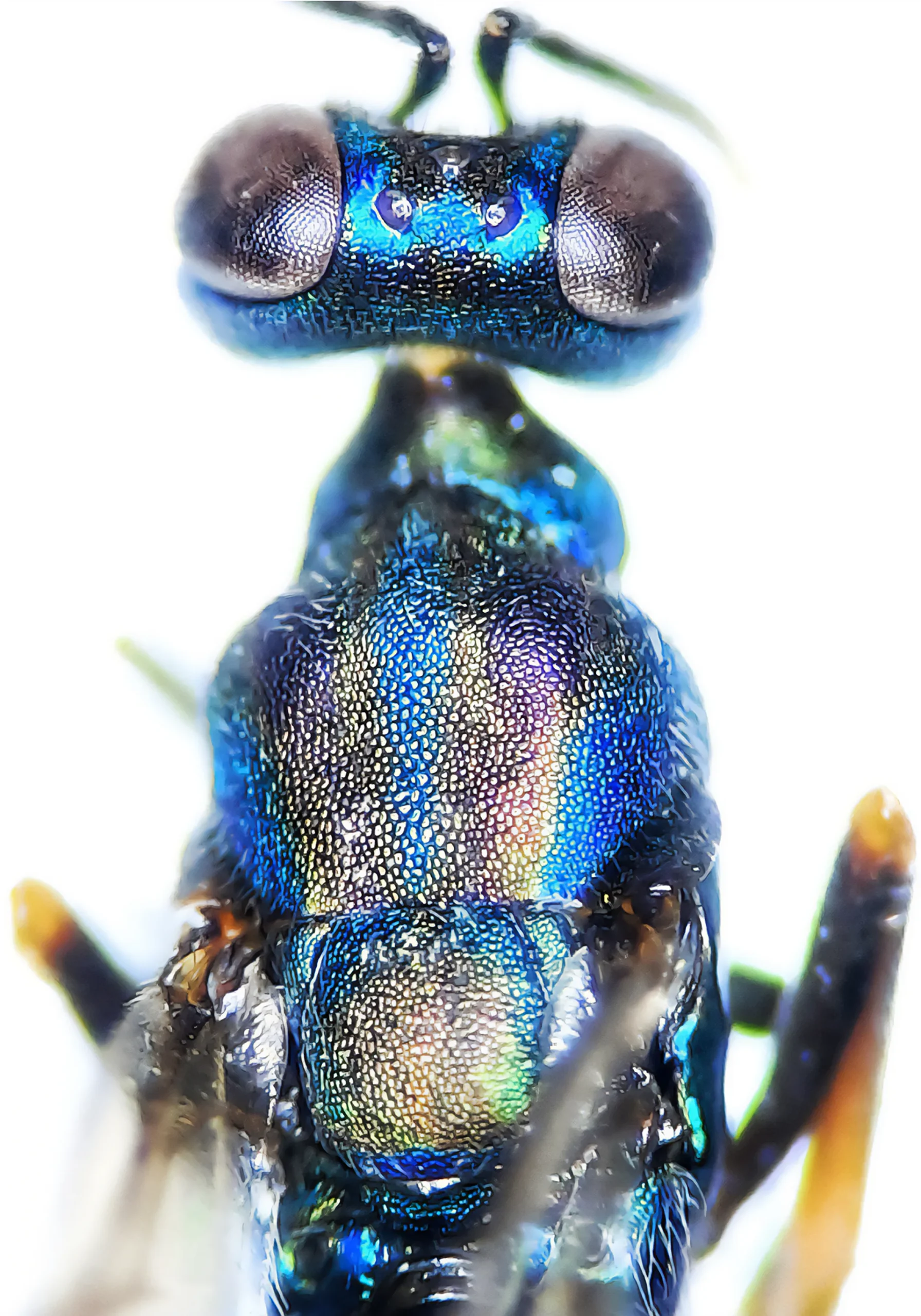
Diomorus calcaratus
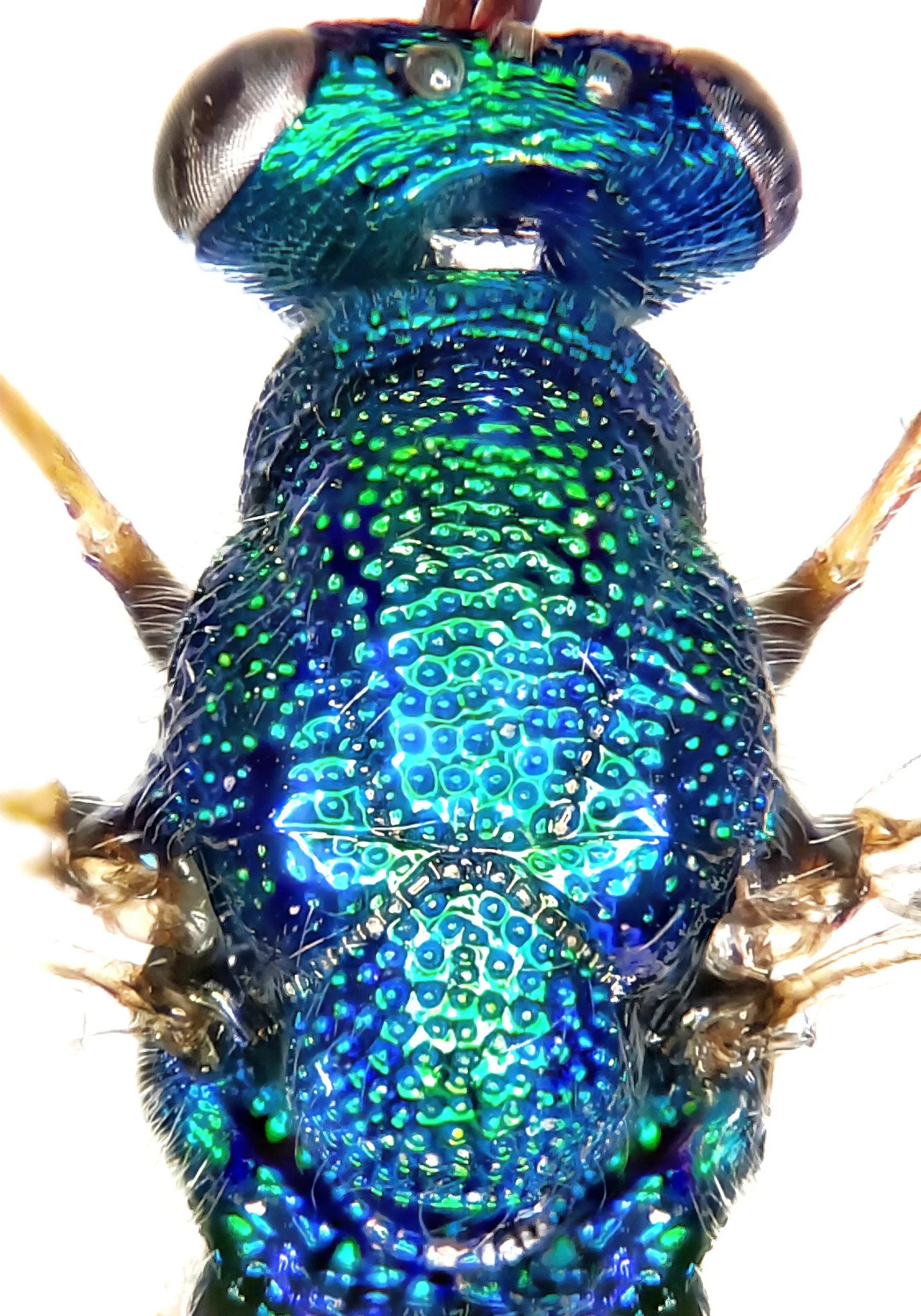
Perilampus
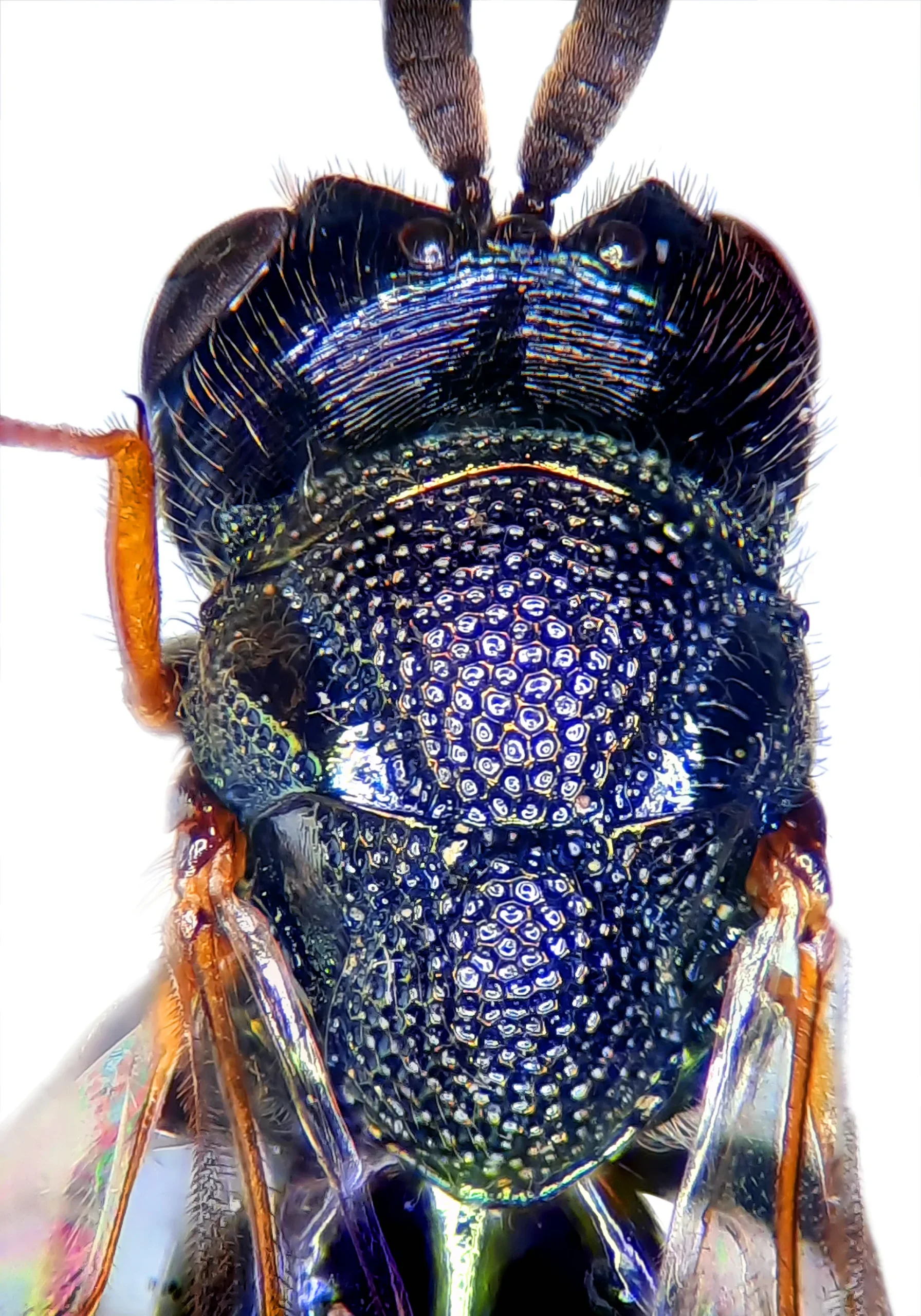
Torymus bedeguaris
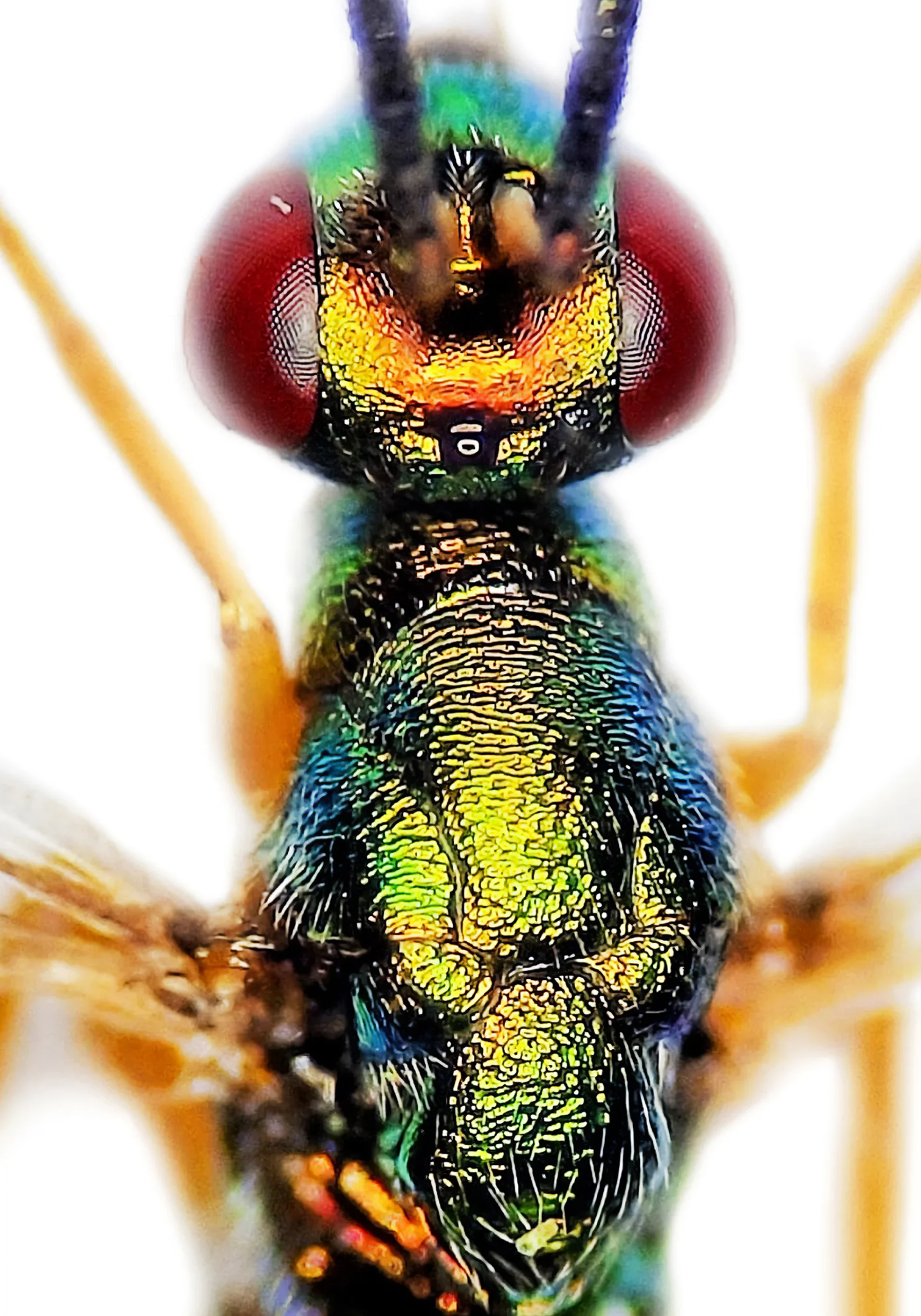
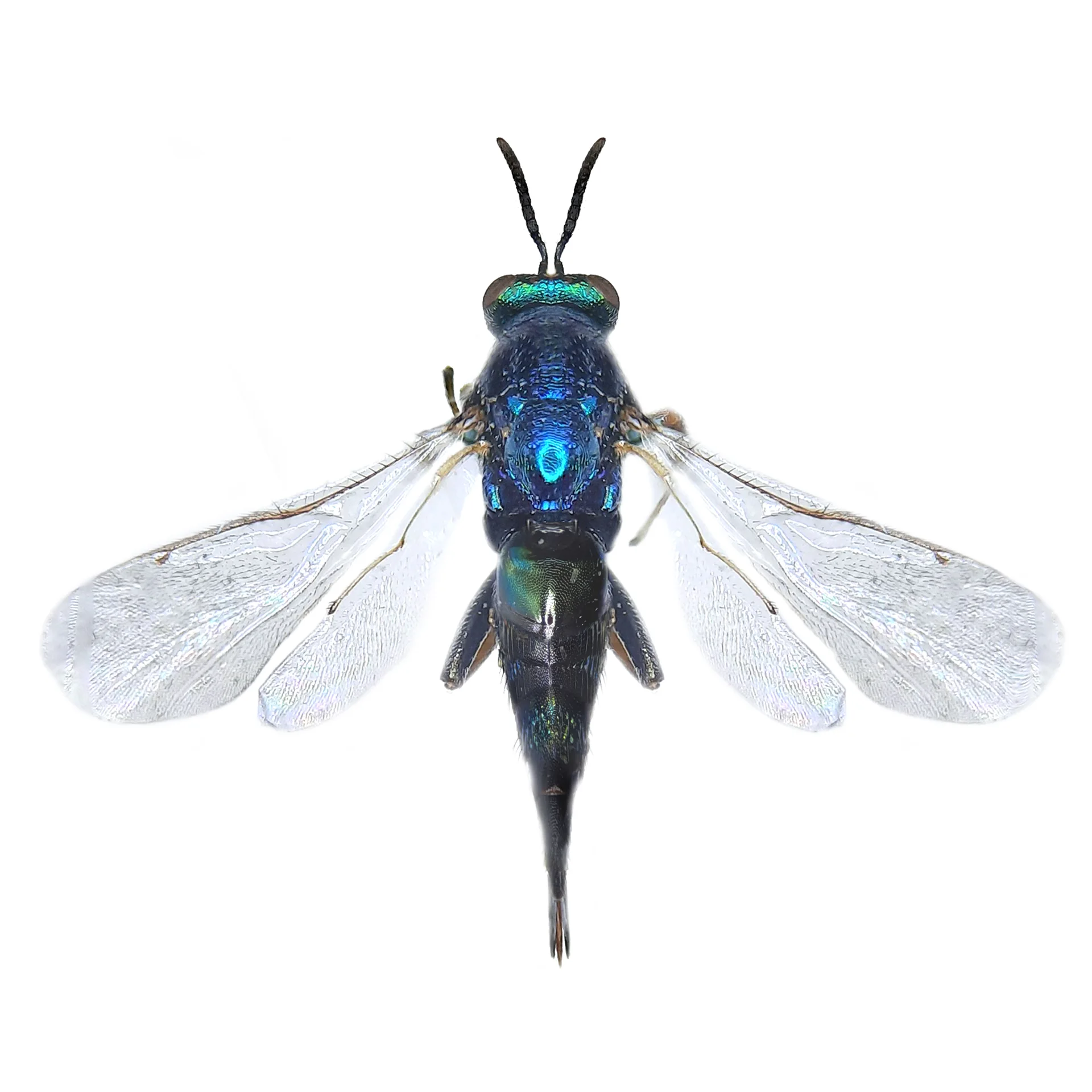
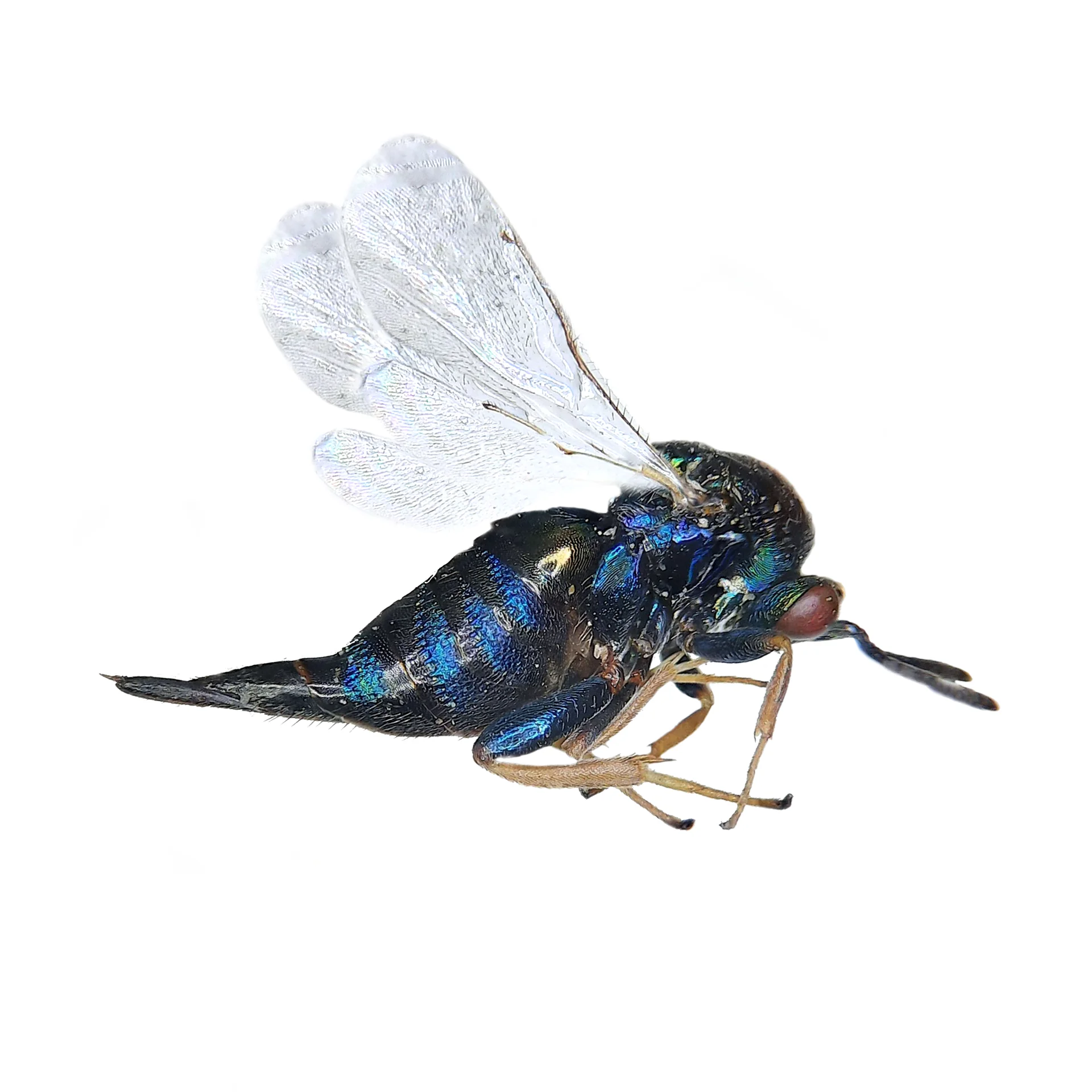
Ormyrus nitidulus
Chapter 2
Augmented reality
of Wasps
Augmented Reality (AR) redefines the way we perceive and interact with these diminutive marvels, the Chalcidoidea, which are often overlooked within the tapestry of nature, and which emerge as unsung heroes of ecological balance. Through the lens of the species Ormyrus nitidulus we invite you to contemplate the beauty that resides within this minutiae of existence. This AR O. nitidulus takes you into a realm where the boundaries between the tangible and the intangible blur, and these wasps come to life in stunning detail.
AR made by István László. Digital 3D object modeled in Zbrush. AR provided by the Vectary platform. The digital 3D object contains 353 000 polygons.
Drag to rotate
Ctrl+Scroll to zoom
Rotate
Zoom
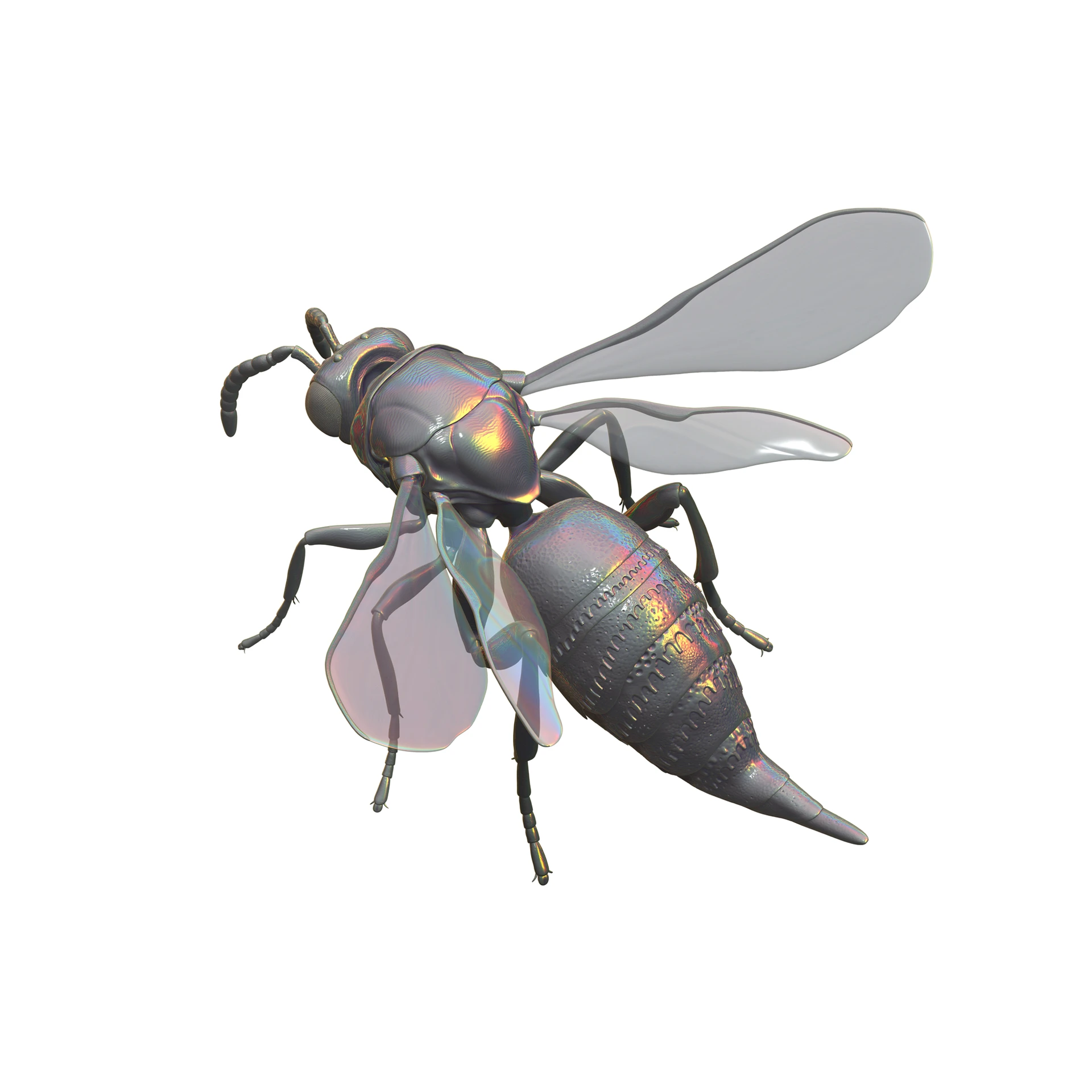
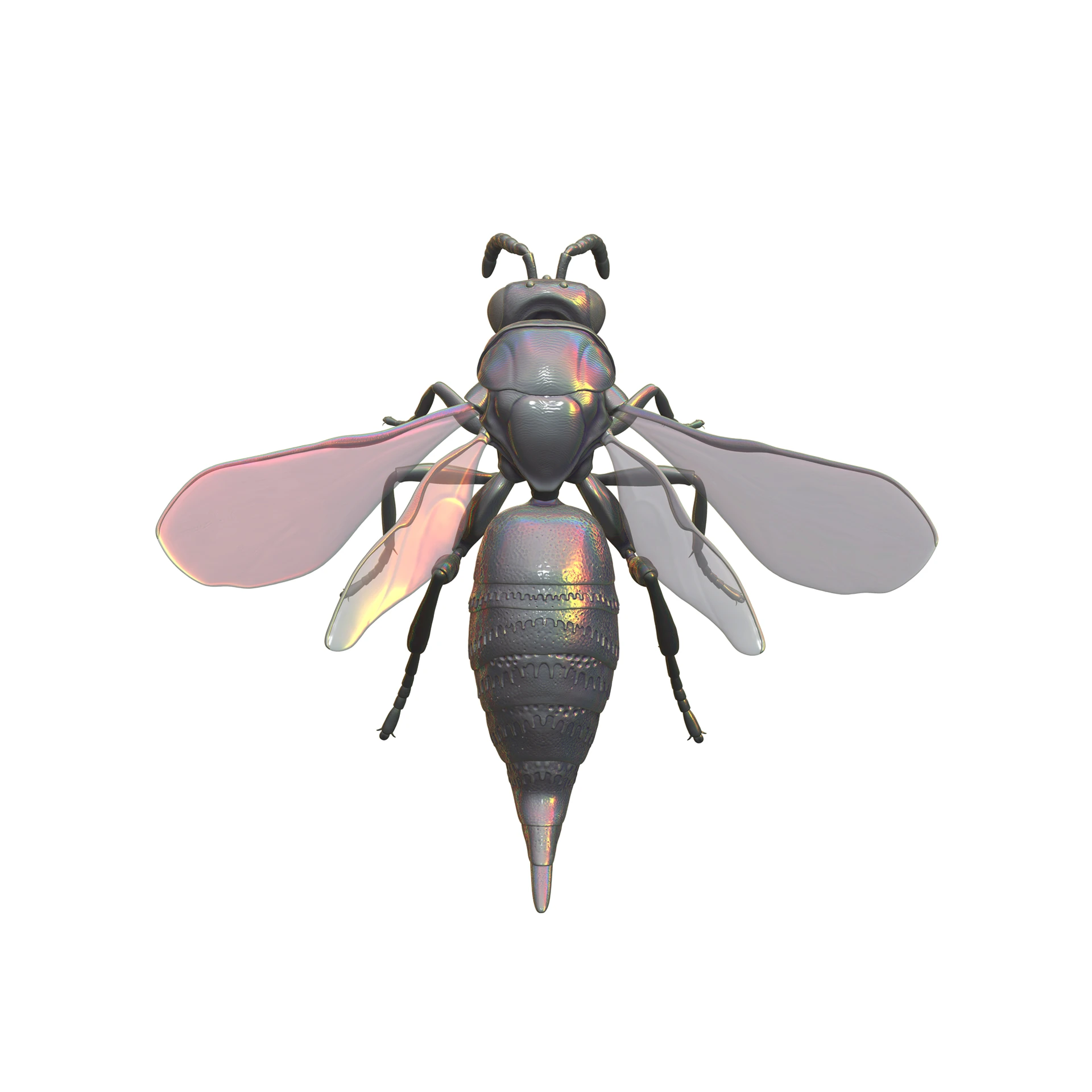
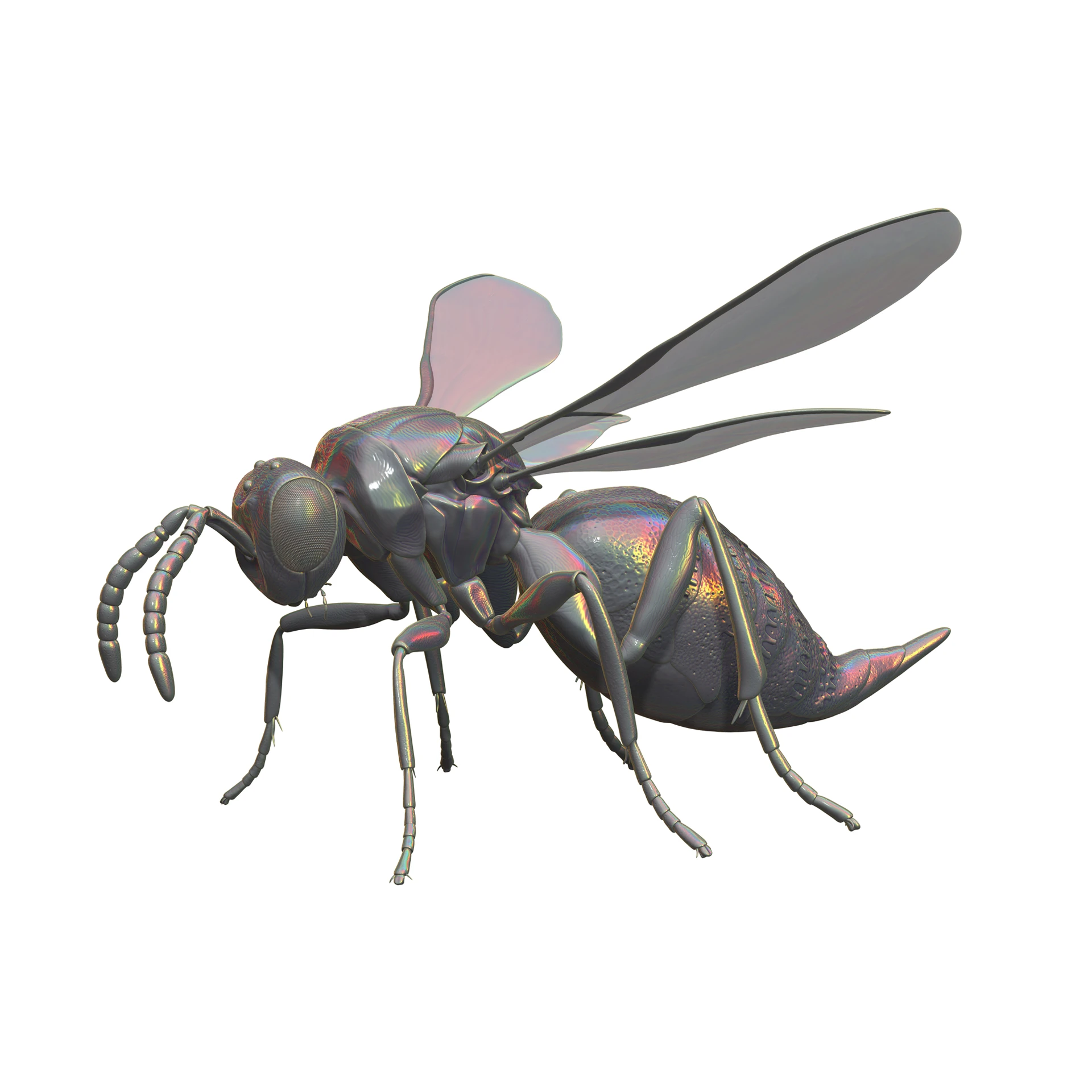
Rendering is the process of generating an image from a 3D model. It is a vital step in the visualization of any digital object. These 3D renders present different points of view of the Ormyrus nitidulus wasp which was specifically created for this exhibition. The left semi-profile view depicts details of the lateral part of the mesosoma (mesopleuron), where the complex musculature beneath leaves different grows and carinae. The dorsal view shows the complex pattern of mesonotal grooves and also here the proportions of the body parts can be examined. The dorsal semi-profile view lets the viewer carefully survey the distinctive scalloped sculpturing of their metasomal tergites.
Ormyrus nitidulus 3D model was created from 36 parts, and before the AR optimization it contained 31.635.536 million polygons. The digital 3D object was modeled, detailed and rendered in Pixologic Zbrush 2021 by István László.
Chapter 3
Deadly Stories
Story 1
Dinocampus
A female braconid wasp of the species Dinocampus coccinellae skims through the undergrowth looking for a suitable host for her larvae. Suddenly, she spots a couple of seven-spottled ladybird beetles (Coccinella septempunctata), feeding on a group of aphids.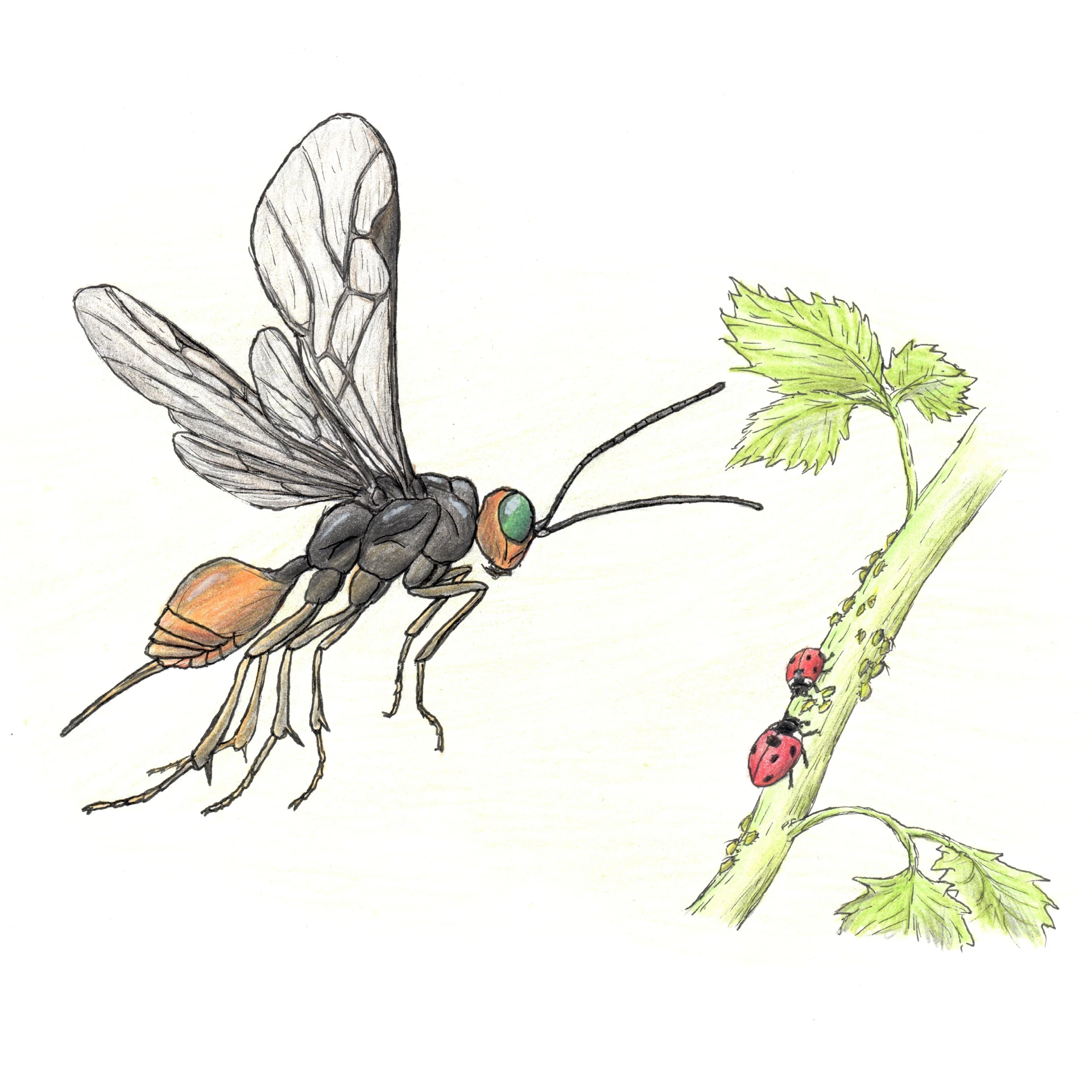 Illustration created by Mátyás Kassay.
Story 1
Dinocampus
The mature female wasp deposits a single egg in the soft underbelly of a female beetle. After the wasp larva emerges, it undergoes four larval instars inside the ladybird. Meanwhile, the ladybird continues its normal activities until the mature larva paralyzes it and tunnels out when ready to emerge. The paralysis is caused by an RNA virus used by the wasp as a biological weapon against it’s host. The larva pupates into a cocoon attached to the ladybird's legs, using the host’s appearance and twitching movements to deter predators.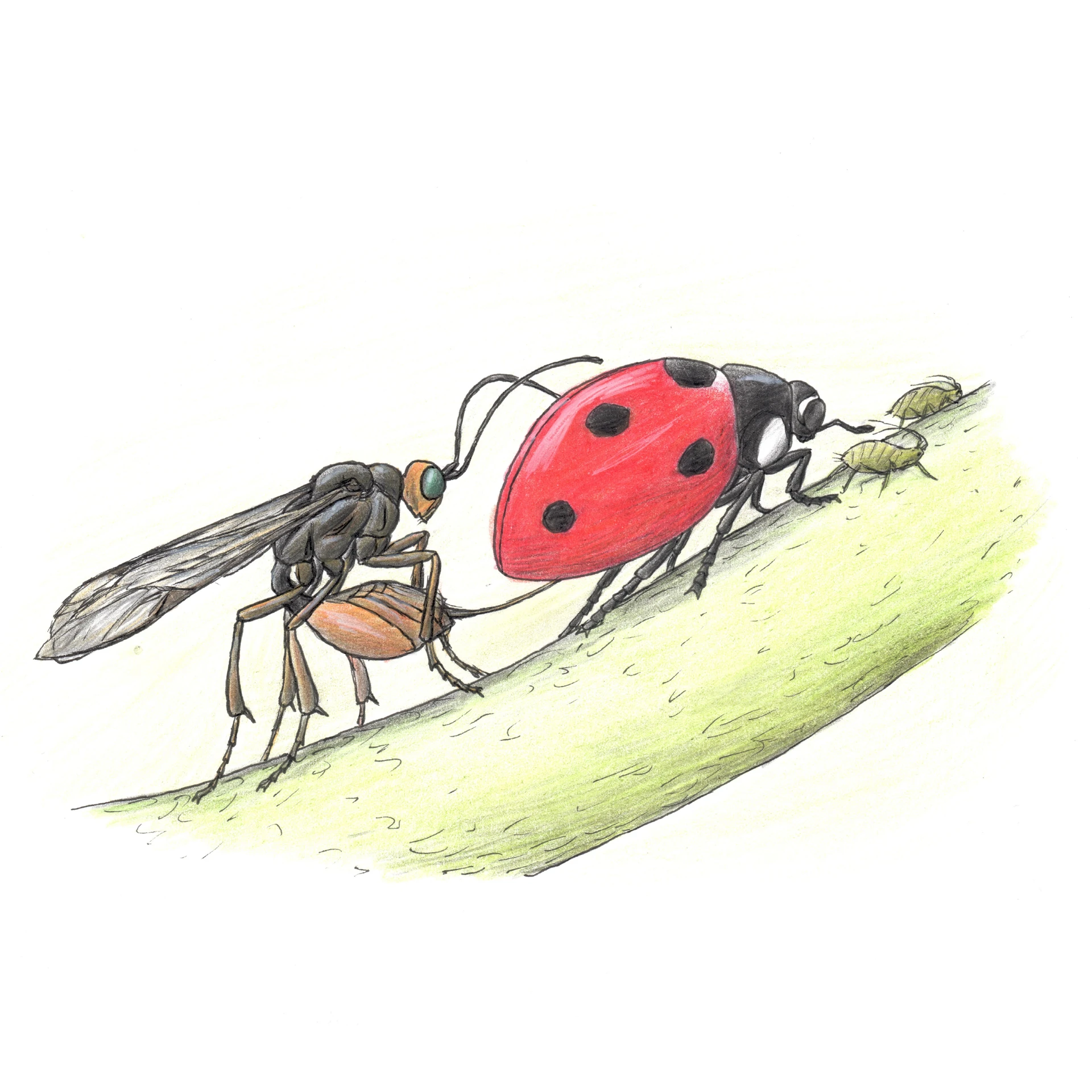 Illustration created by Mátyás Kassay.
Story 1
Dinocampus
Although the cocooned wasp is vulnerable, the ladybird acts as its bodyguard, fending off potential predators. However, this protection comes at a cost, as the energy demands reduce the wasp's reproductive output. After close a week the adult wasp emerges from the cocoon, restarting the life cycle.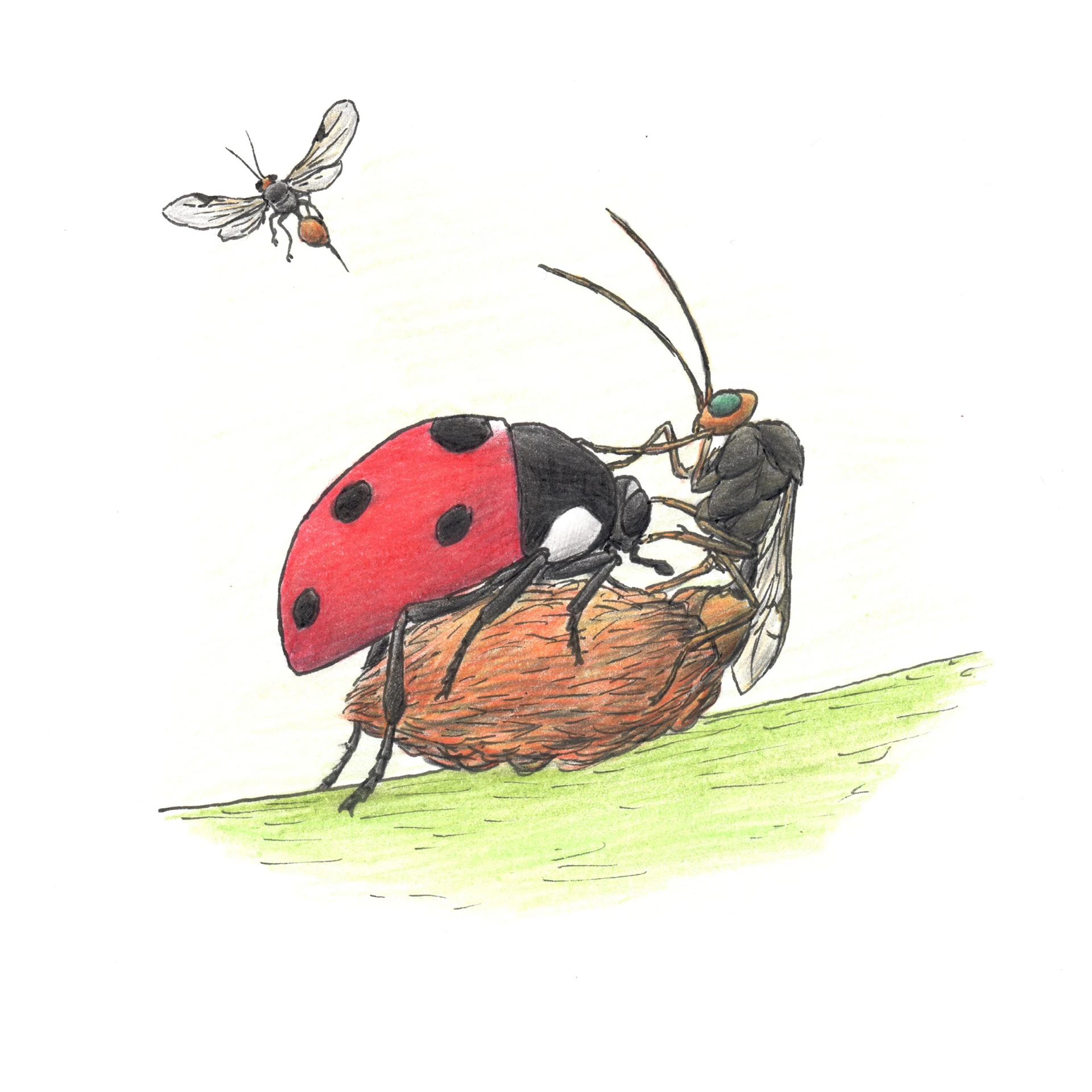 Illustration created by Mátyás Kassay.
Story 2
Lasiochalcidia
Antlion (Myrmeleontidae) larvae either conceal themselves under leaves, debris or pieces of wood, hiding in a crack or digging a funnel-shaped pit in loose material. As ambush predators, catching prey is risky because food arrives unpredictably and, for those species that make traps, maintaining one is costly. The larvae therefore have low metabolic rates and can survive for long periods without food. Lasiochalcidia species belong to Chalcididae, a family whose species have large hind femurs and are mostly associated as parasitoids of antlion larvae.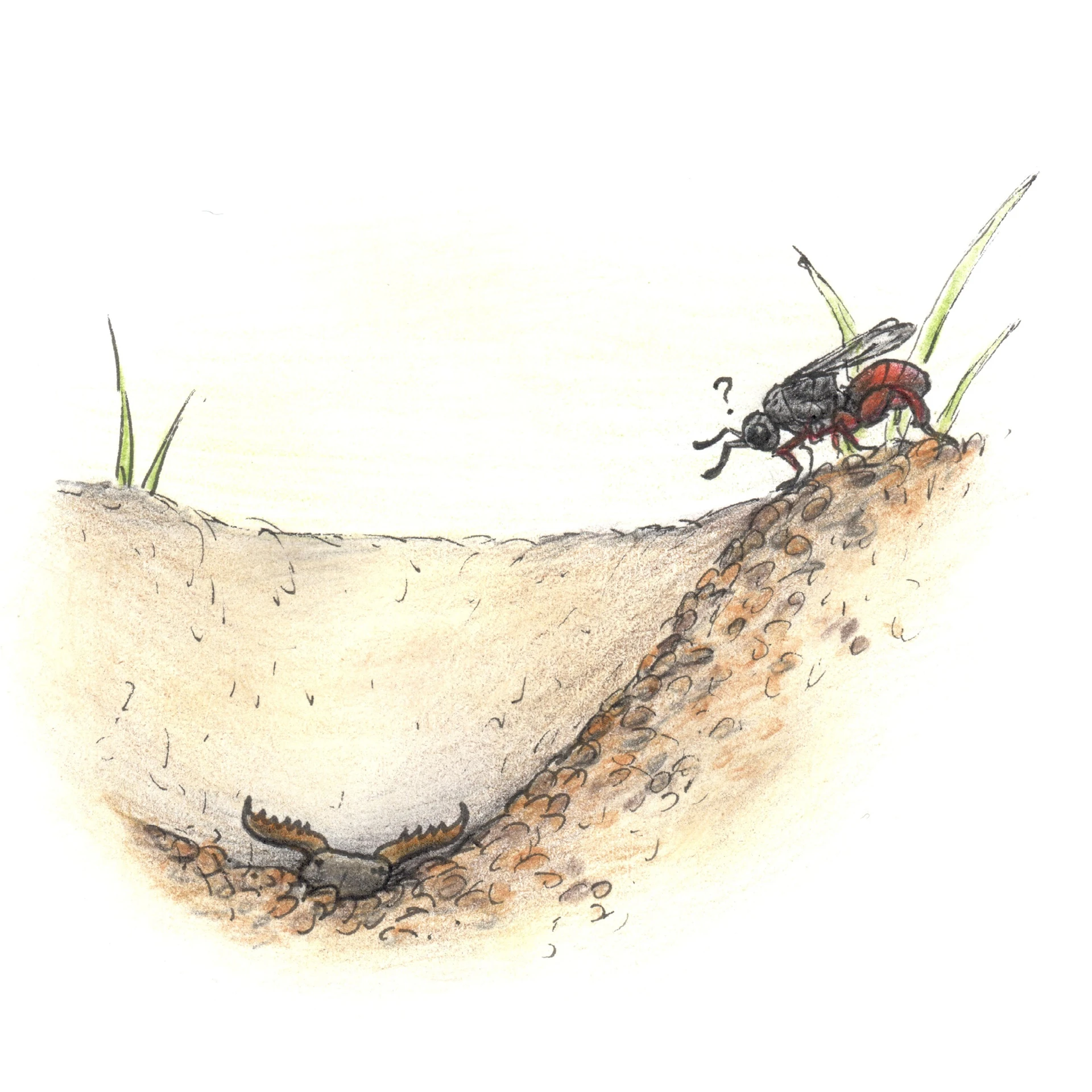 Illustration created by Mátyás Kassay.
Story 2
Lasiochalcidia
The female parasitoid provokes the antlion larva to attack its hind legs with the powerful and deadly mandibles of the antlion larva. When the antlion grabs on, the toothed mandibles get held on by the rugate basal teeth of the hindlegs of the parasitoid. Now the parasitoid stretches the antlion’s jaws apart using its muscular legs making the predator helpless and exposing its most vulnerable and least chitinous part of its body, the ventral side of its neck. The parasitoid takes its time and carefully oviposit an egg through the antlion's exposed throat not harming any of its vital organs.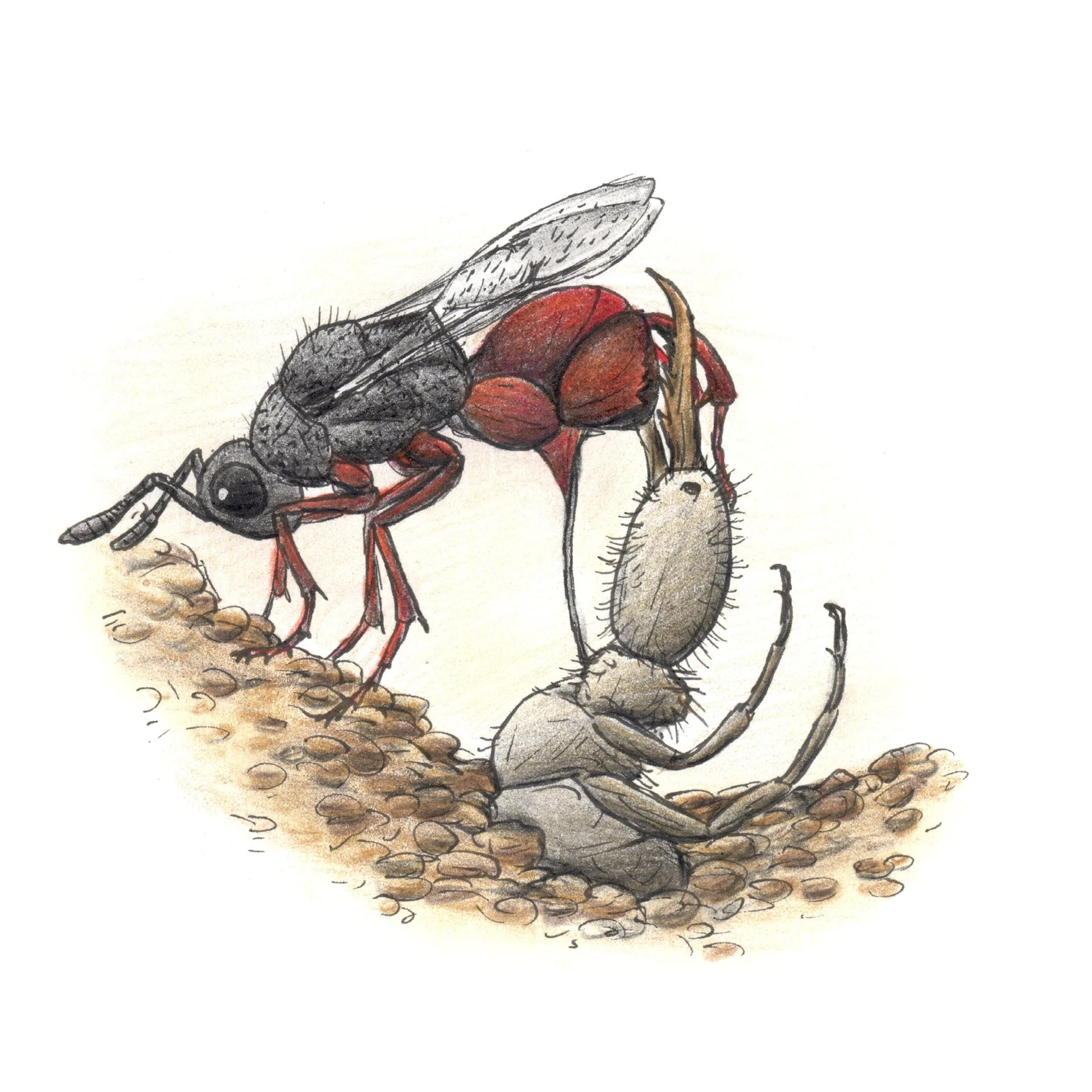 Illustration created by Mátyás Kassay.
Story 2
Lasiochalcidia
After done, the parasitoid releases the helpless antlion larva from its hold and flies off. The egg will soon hatch into a larva, feeding on the antlion from the inside, until the time for metamorphosis comes. At this point the wasp will burst out from the antlion, just like in the infamous scene from the movie Alien. The fully developed wasp flies off, while the antlion is left to rot in his own death trap.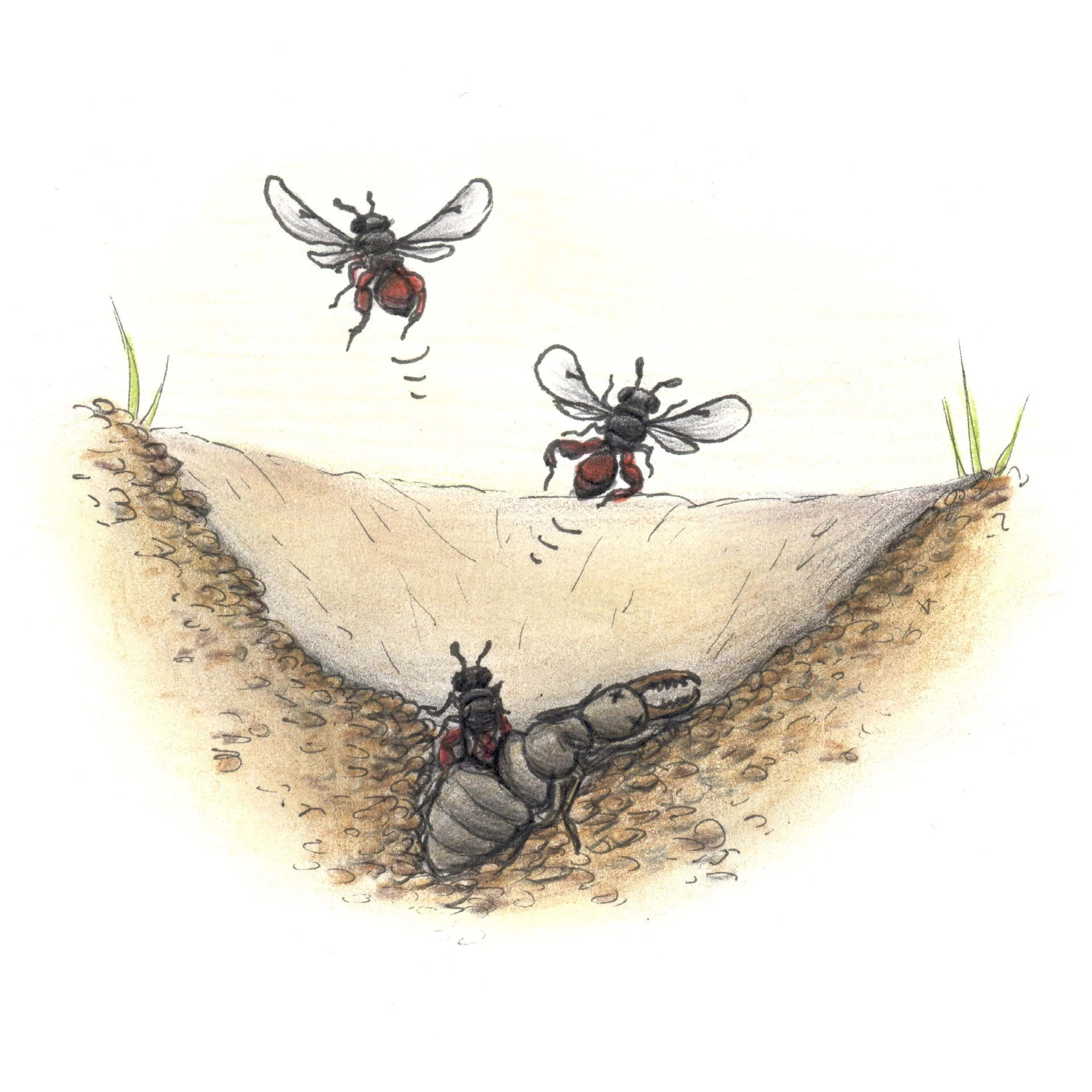 Illustration created by Mátyás Kassay.
Story 3
Podagrion
A female praying mantis (Mantis religiosa) has just finished depositing her ootheca. A tiny wasp from the genus Podagrion, traveling unnoticed on the female mantis’ back until now, proceeds to immediately land on it.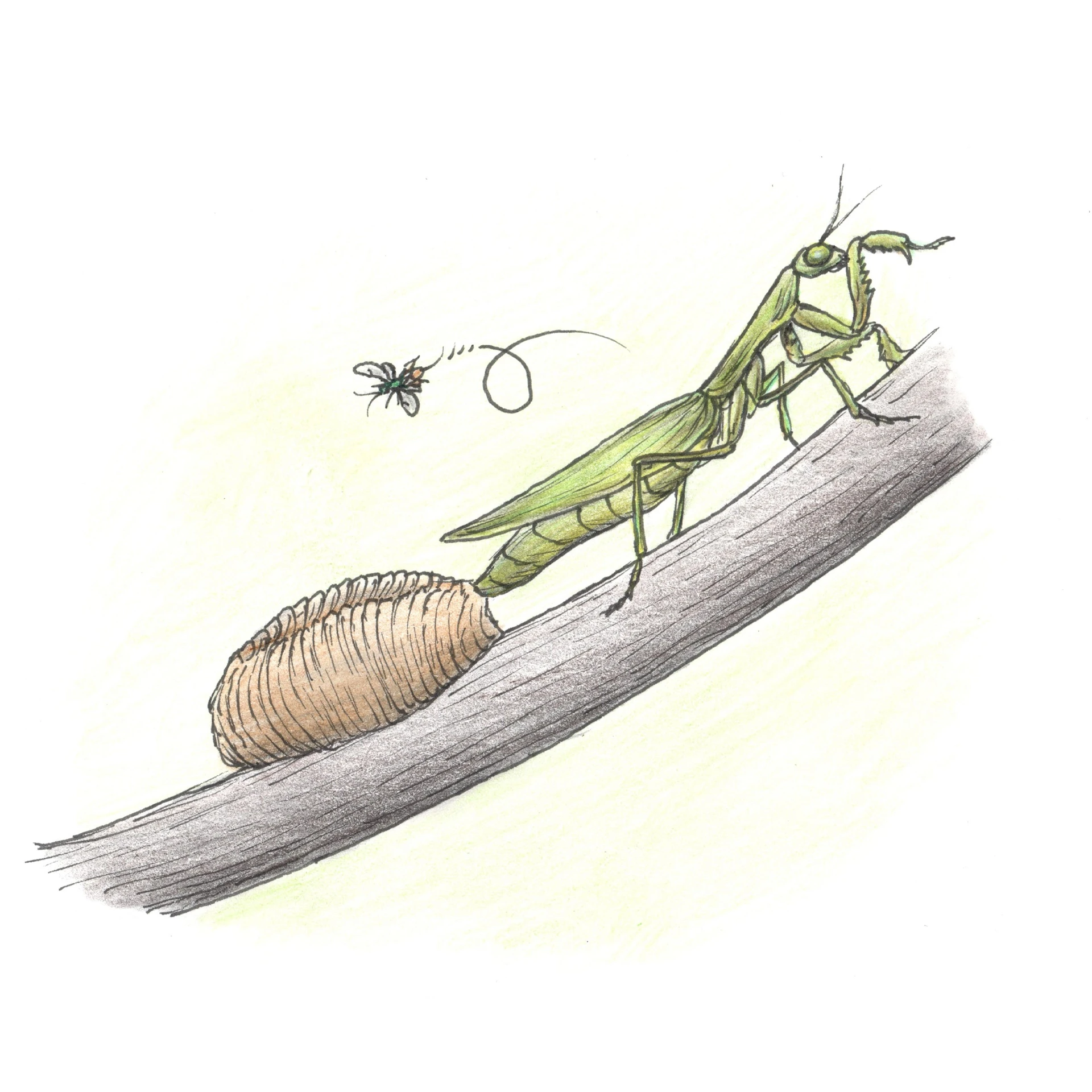 Illustration created by Mátyás Kassay.
Story 3
Podagrion
All species of the genus Podagrion parasitize the ootheka of mantids. These wasps are only 2-3 millimeters long, with the female supporting an ovipositor twice the length of her body. The most characteristic trait of this tiny wasp is the enlarged and serrated hind femur. Although females prefer fresh, soft ootheca, they can also deposit in old, hardened ones, even the one that they themselves have emerged from, stabbing and sawing through the hard foam with their long ovipositor.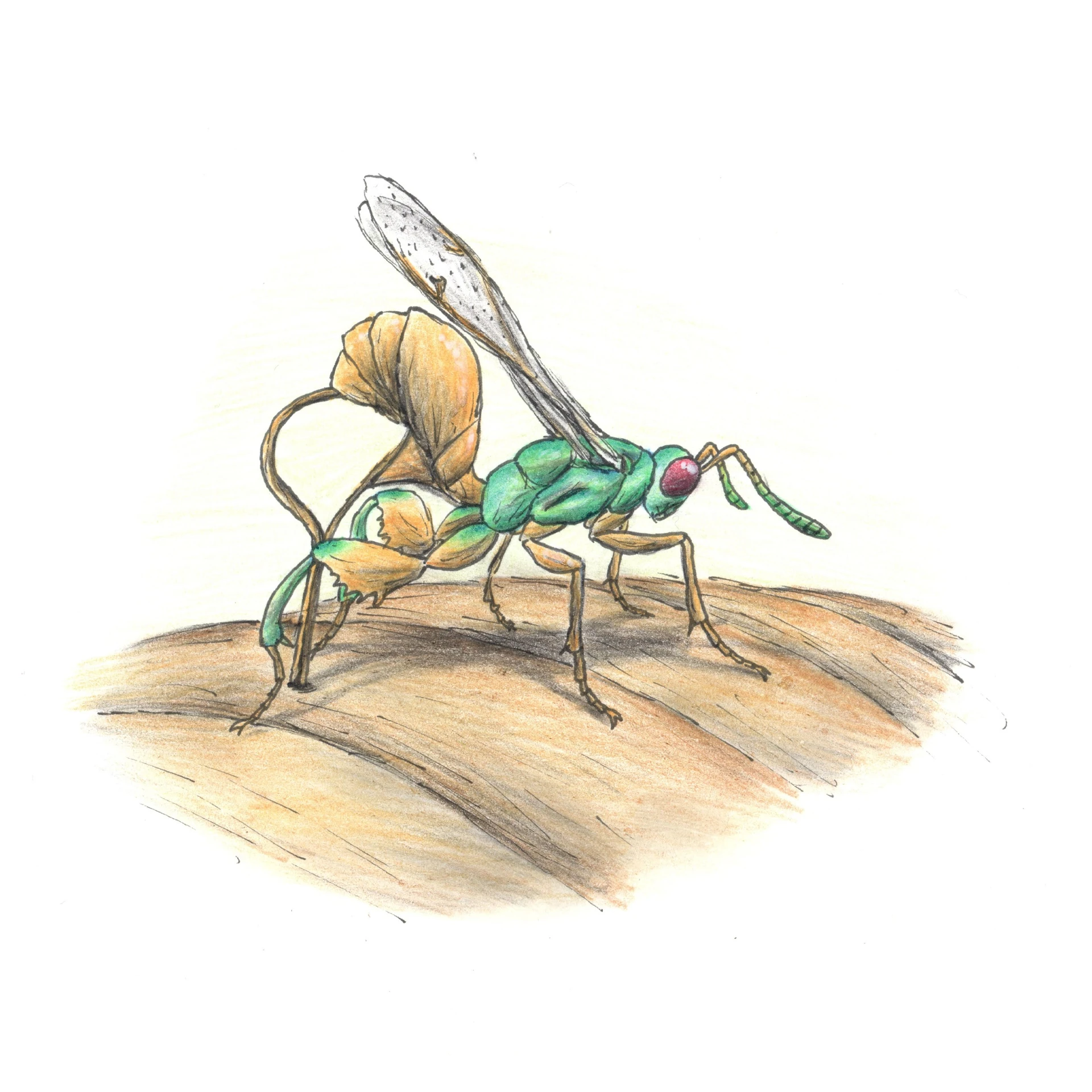 Illustration created by Mátyás Kassay.
Story 3
Podagrion
The number of adult wasps emerging from the ootheca is highly variable, from just a few to even hundreds. The first emerging wasps need to cut an opening on the side of the ootheca, while late emergers often use previously made exits. Male parasitoids emerge 1-5 days before females, and will try to wait out the arrival of the females while attempting to get rid of rival males using their strong hind feet.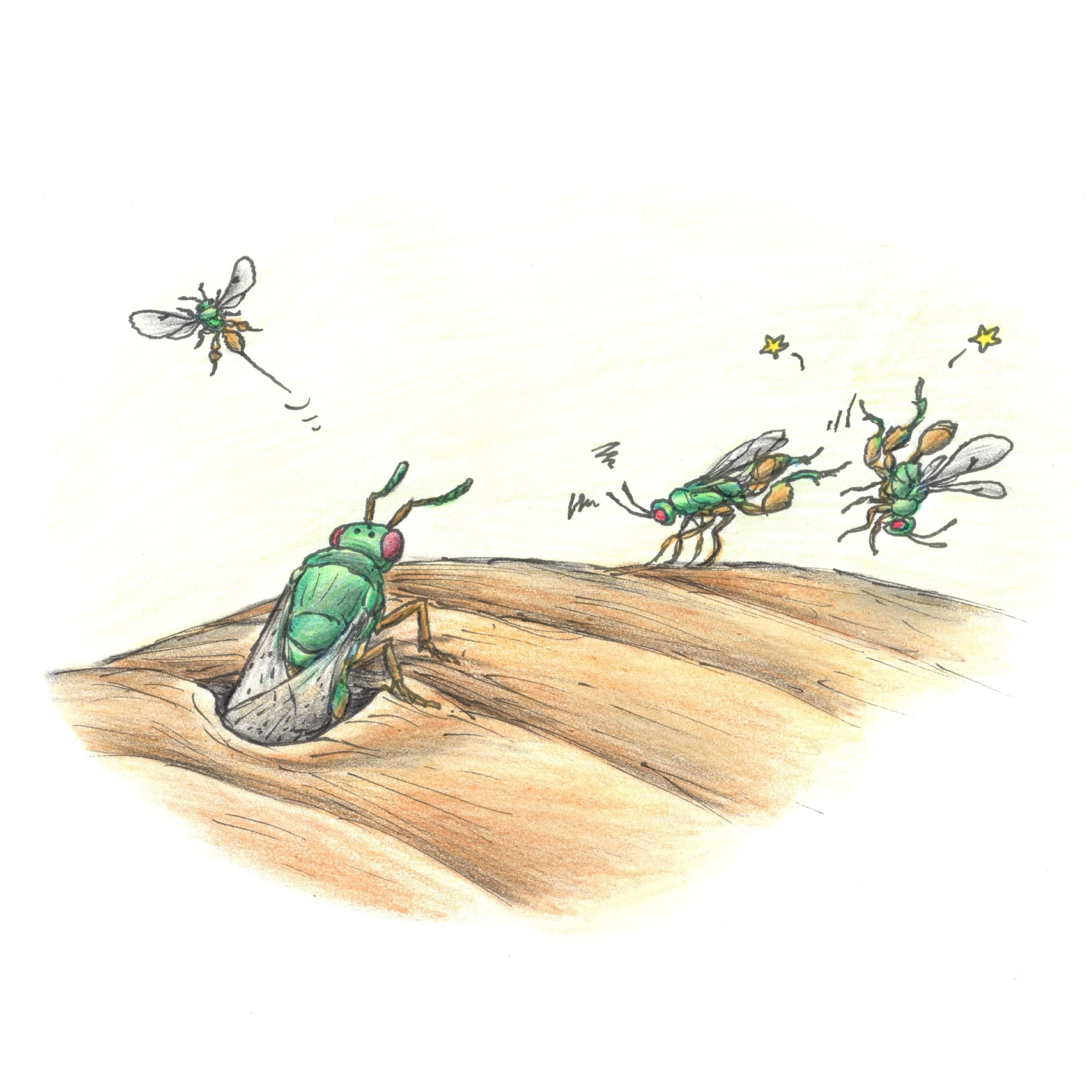 Illustration created by Mátyás Kassay.
Chapter 4
A drawer-sized
collection
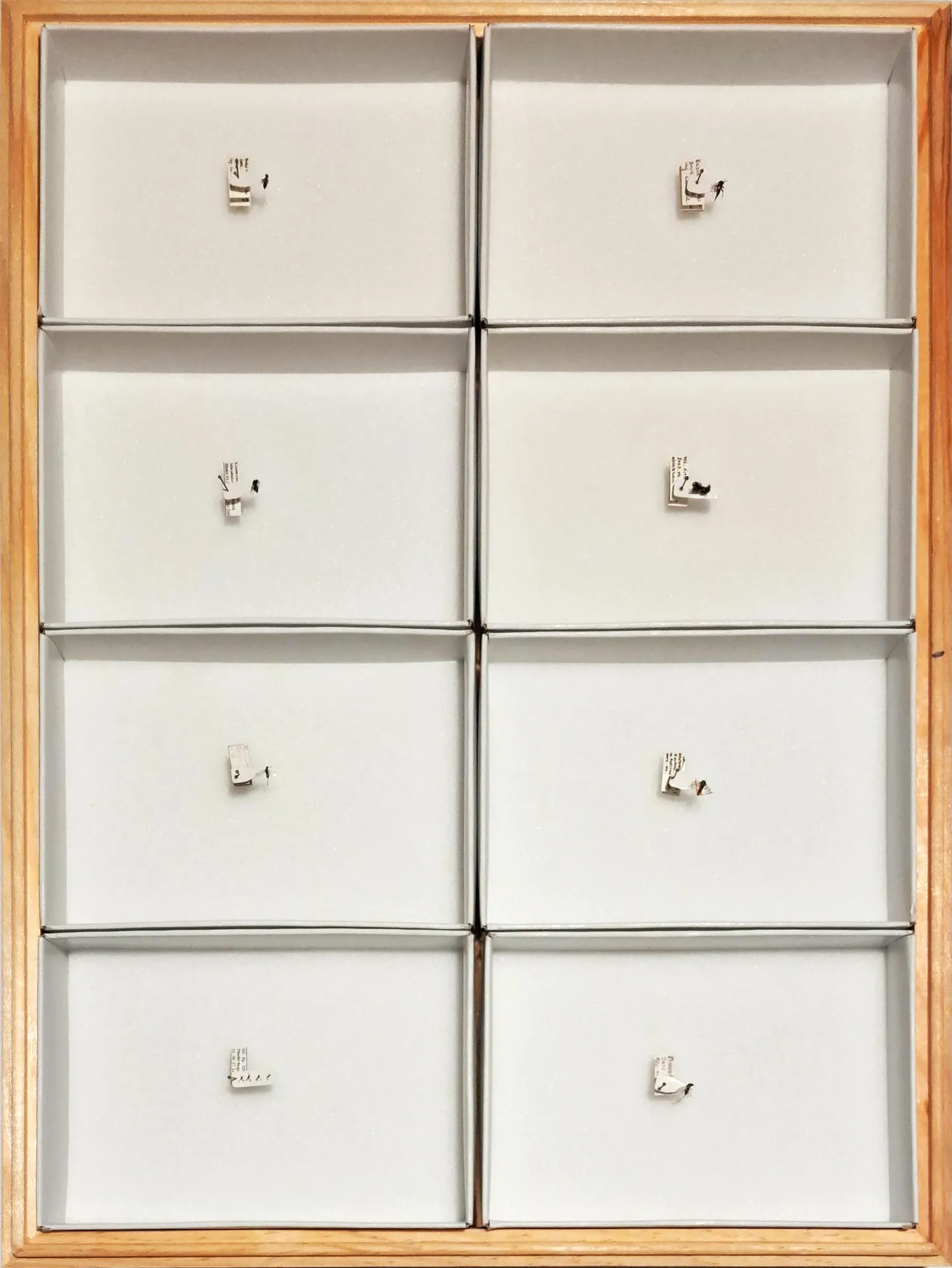
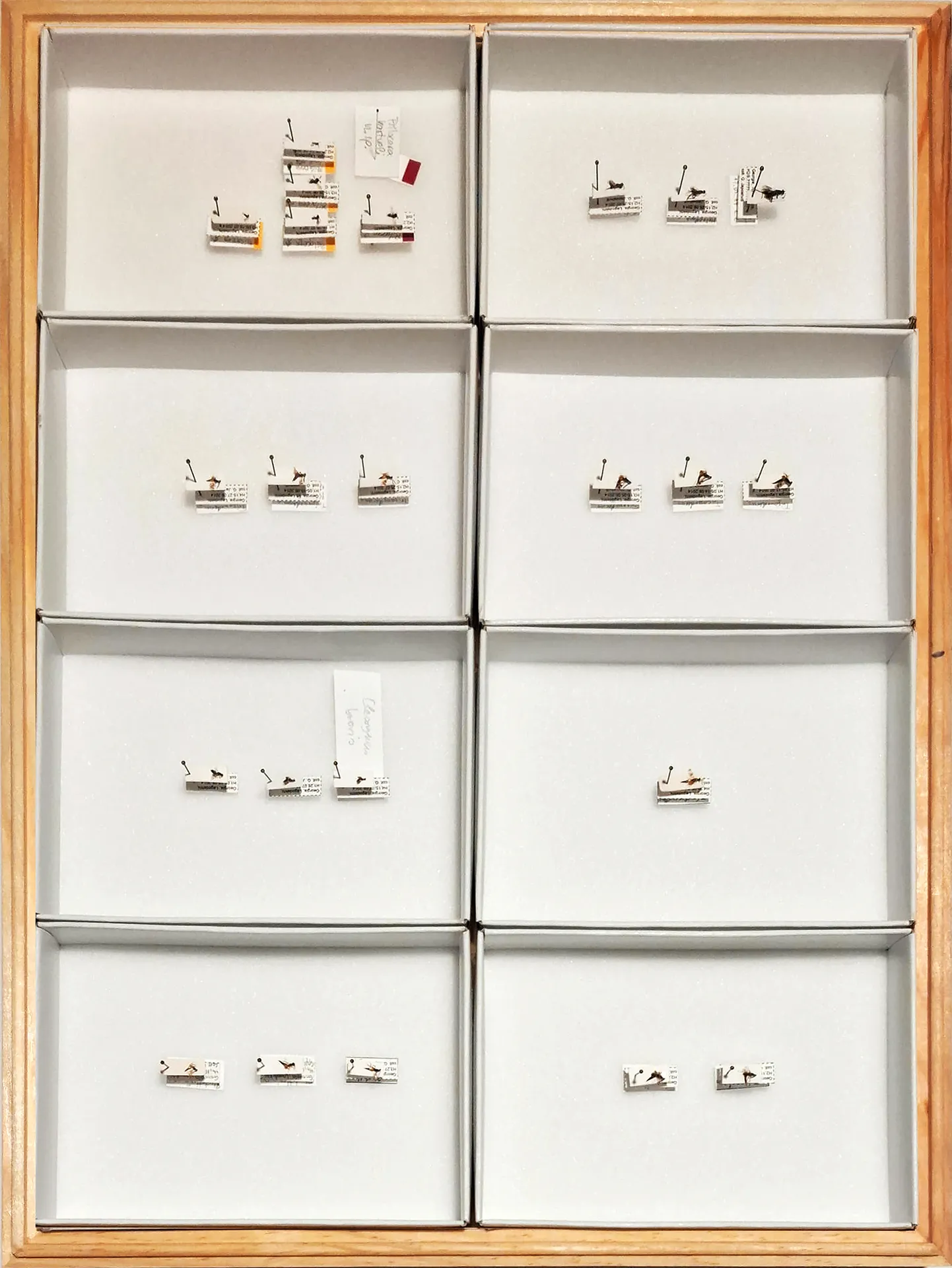
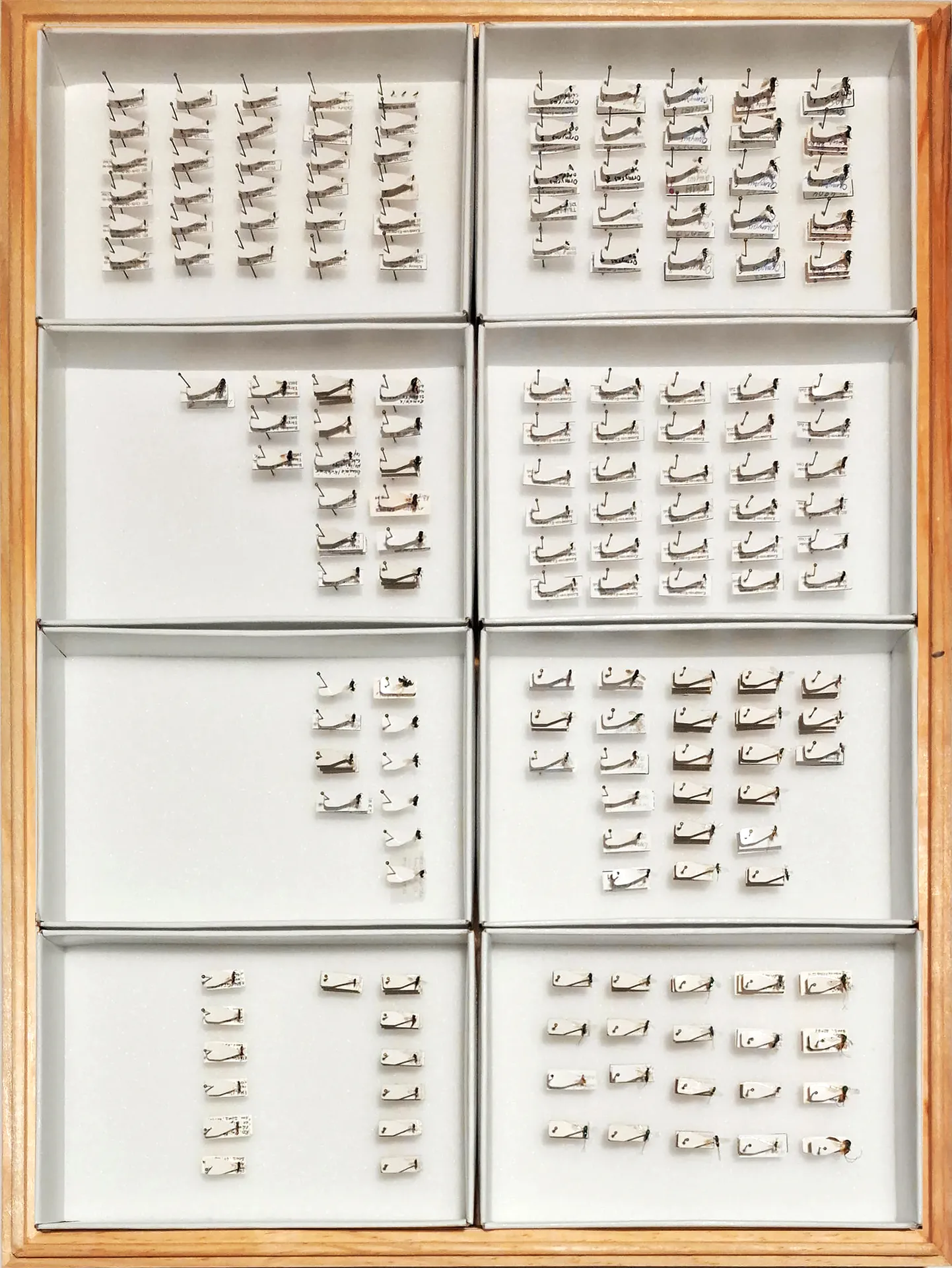
Collecting the jewel wasps is somewhat challenging, as the tiny-sized creatures must be separated from larger insects, while bees, wasps, grasshoppers, locusts, and bugs swarm in the net. The netting is done with a special collecting net (1), whose structure allows for the collection of tiny animals mostly moving in the undergrowth. During a typical collection trip for jewel wasps, netting is followed by aspirating (2). At this point, after netting, the collector pulls the net over their head and uses an aspirator to individually extract the necessary wasps. It is advisable to sort the collected animals under a microscope (3) on the same day and even prepare the more special ones before alcohol storage. A typical collection day usually ends after midnight due to sorting and preparation.
Chapter 5
Sculpted parasitoids
The first model of the Ormyrus nitidulus female depicts her during flight. These wasps have well-developed wings that enable them to maneuver swiftly in various environments, including dense vegetation where their hosts may be found.
3D model optimized for 3D printing from Pixologic Zbrush 2021. The model was decimated for 3D printing from 31.635.536 million polygons to 1.046 million polygons. Digital 3D object modeled by István László. Objects were printed with Prusa and Phrozen 3D printers using Phrozen resins. Slicing done with Prusa Slicer. Prints by Ionut Rus. Scale is 75:1.
The second 3D sculpture depicts a female Ormyrus nitidulus in search of a host. These tiny jewel wasps move with incredible speed (often hopping) among the oak leaves, while sniffing out developing galls.
3D model optimized for 3D printing from Pixologic Zbrush 2021. The model was decimated for 3D printing from 31.635.536 million polygons to 1.046 million polygons. Digital 3D object modeled by István László. Objects were printed with Prusa and Phrozen 3D printers using Phrozen resins. Slicing done with Prusa Slicer. Prints by Ionut Rus. Scale is 75:1.
The third model depicts the female Ormyrus nitidulus during the act of ovipositing. After locating the host hidden within its gall, the wasp deploys its ovipositor. This organ acts as a highly precise tool used to penetrate plant tissues in order to deposit the eggs inside the helpless host larva.
3D model optimized for 3D printing from Pixologic Zbrush 2021. The model was decimated for 3D printing from 31.635.536 million polygons to 1.046 million polygons. Digital 3D object modeled by István László. Objects were printed with Prusa and Phrozen 3D printers using Phrozen resins. Slicing done with Prusa Slicer. Prints by Ionut Rus. Scale is 75:1.
Chapter 6
Biodiversity
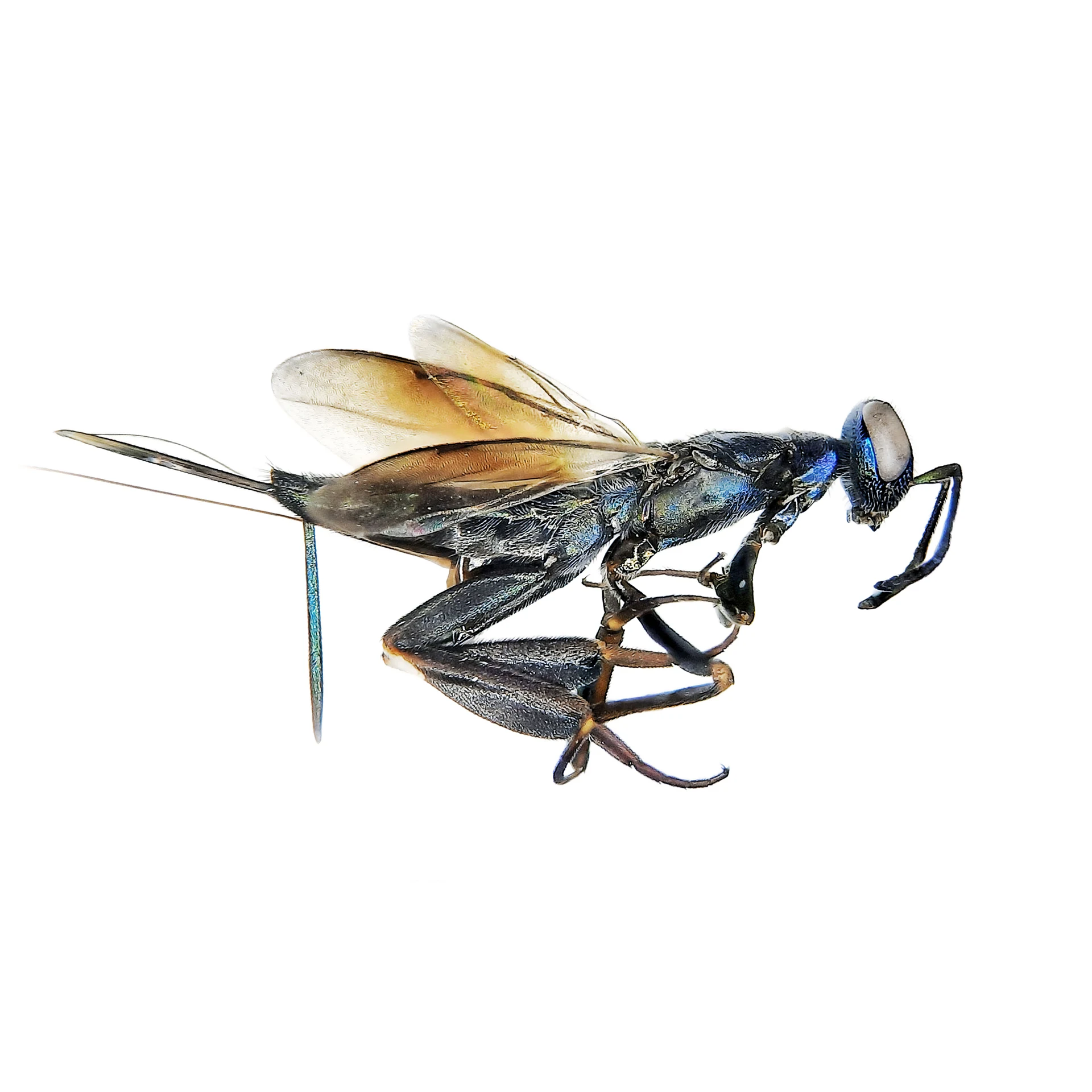
Metapelma nobile
Heydenia pretiosa
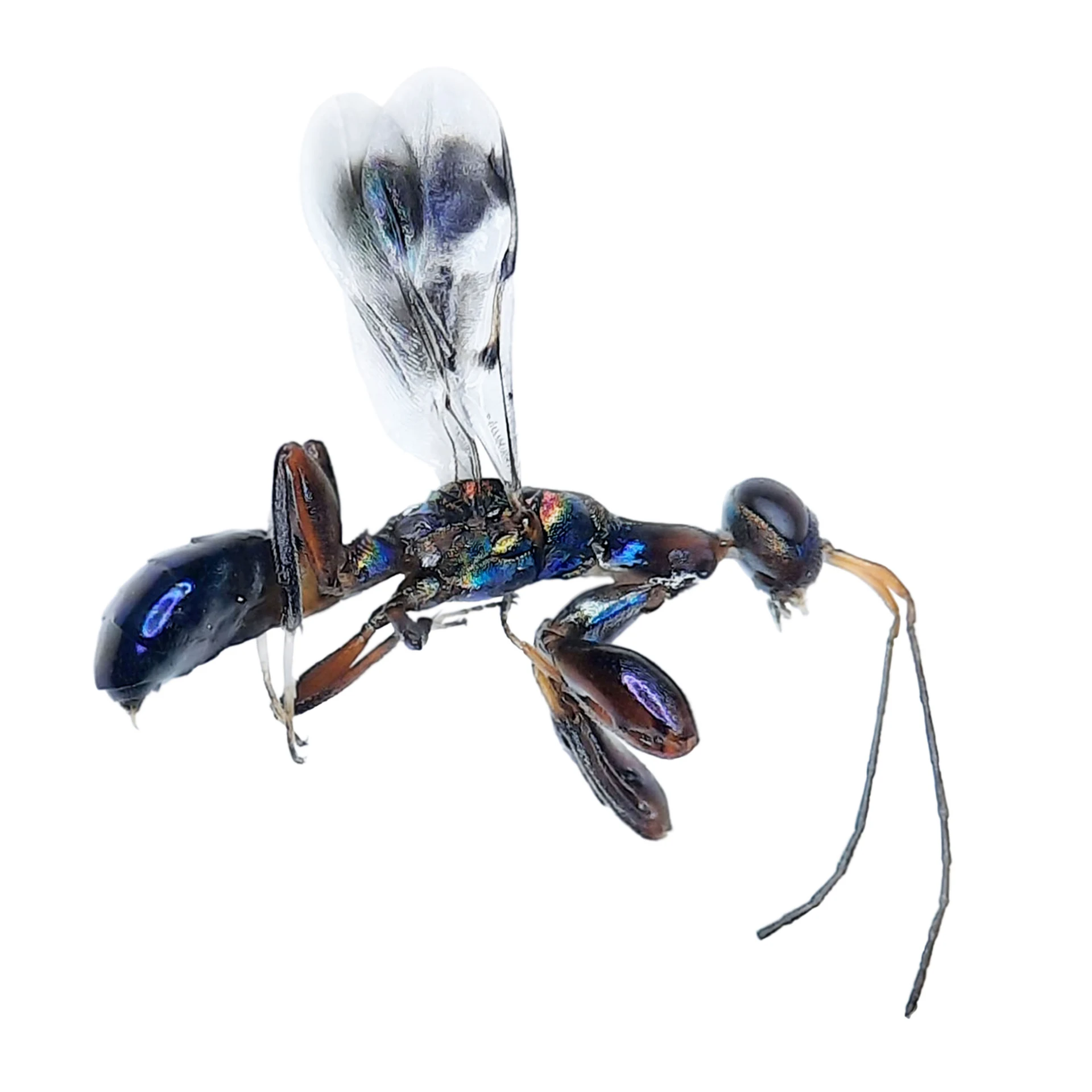
Glyphomerus aylax
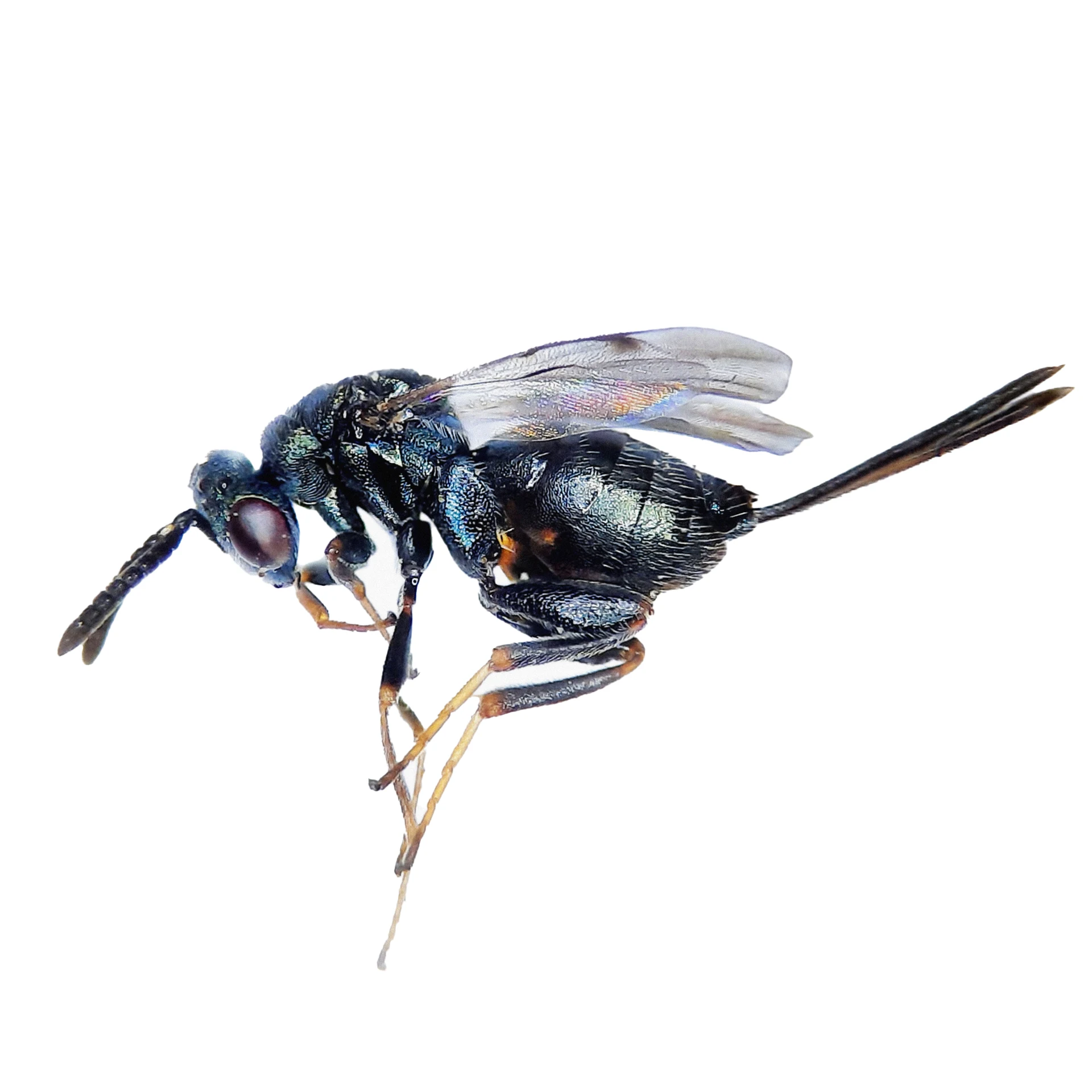
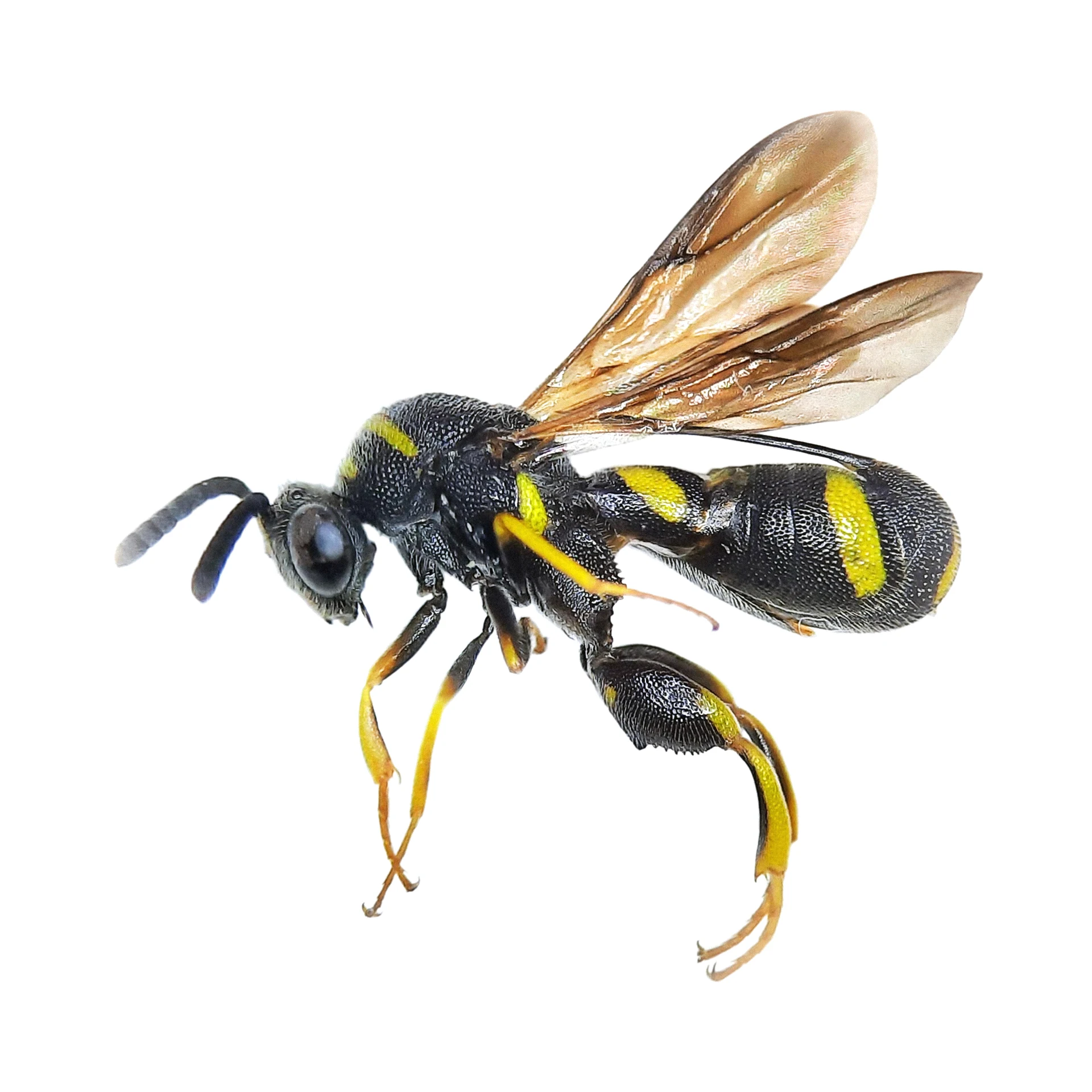
Leucospis dorsigera
Other exhibitions
Solitary Bees
Tiny Heroes
of Nature